

The announcement that Trump has purchased approximately $200 million in mortgage-backed securities (MBS) is a notable development for financial markets, particularly housing and interest rates. While the dollar amount itself is relatively modest in the context of total bond markets, the signal it sends about policy direction is far more important than the size of the transaction.
To understand the impact, it helps to first look at how the mortgage market works. The majority of home loans in the U.S. do not stay on banks’ balance sheets. Instead, they are bundled together into mortgage-backed securities and sold to investors on the secondary market. These MBS are a core part of the fixed-income universe, trading alongside assets like U.S. Treasuries and corporate bonds.
In fixed-income markets, prices and interest rates move in opposite directions. When demand for bonds increases and prices rise, yields (or rates) fall. This inverse relationship is fundamental. As investors bid up the price of securities, the return earned by holding them declines, which translates into lower interest rates for borrowers.
By purchasing $200 million in mortgage-backed securities, additional demand is injected directly into the MBS market. That increased demand pushes MBS prices higher, which in turn places downward pressure on mortgage rates. Even a relatively small purchase can have a measurable effect if it influences expectations or encourages other market participants to follow suit.
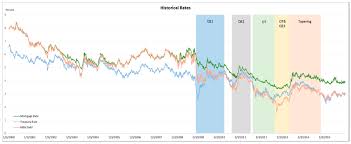
The broader significance lies in what this move represents from a policy perspective. Over the past period, the government has been engaged in monetary tightening—raising rates and reducing balance sheet exposure in an effort to control inflation. Buying mortgage-backed securities marks a shift away from that stance and toward quantitative easing (QE), a policy framework where the government actively purchases financial assets to lower interest rates and stimulate economic activity.
Quantitative easing is designed to make borrowing cheaper, support housing markets, and encourage investment and consumption. A return to MBS purchases suggests a renewed focus on supporting growth and easing financial conditions, particularly in interest-rate-sensitive sectors like real estate.
In summary, while the $200 million MBS purchase may seem small in isolation, its importance lies in its market impact and policy implications. It puts downward pressure on mortgage rates, supports housing affordability, and—most importantly—signals a potential shift back toward quantitative easing after a period of monetary tightening.
Jon Kumin
Senior Sales Associate and Relocation Specialist
Direct: 617.794.4045
Websites: jonkumin.com
Coldwell Banker Newton
My Sold Listings